TRANSFORMING HOMES SINCE 2007
PART OF THE EXPRESS GROUP
DEDICATED SUPPLY & INSTALL SERVICE
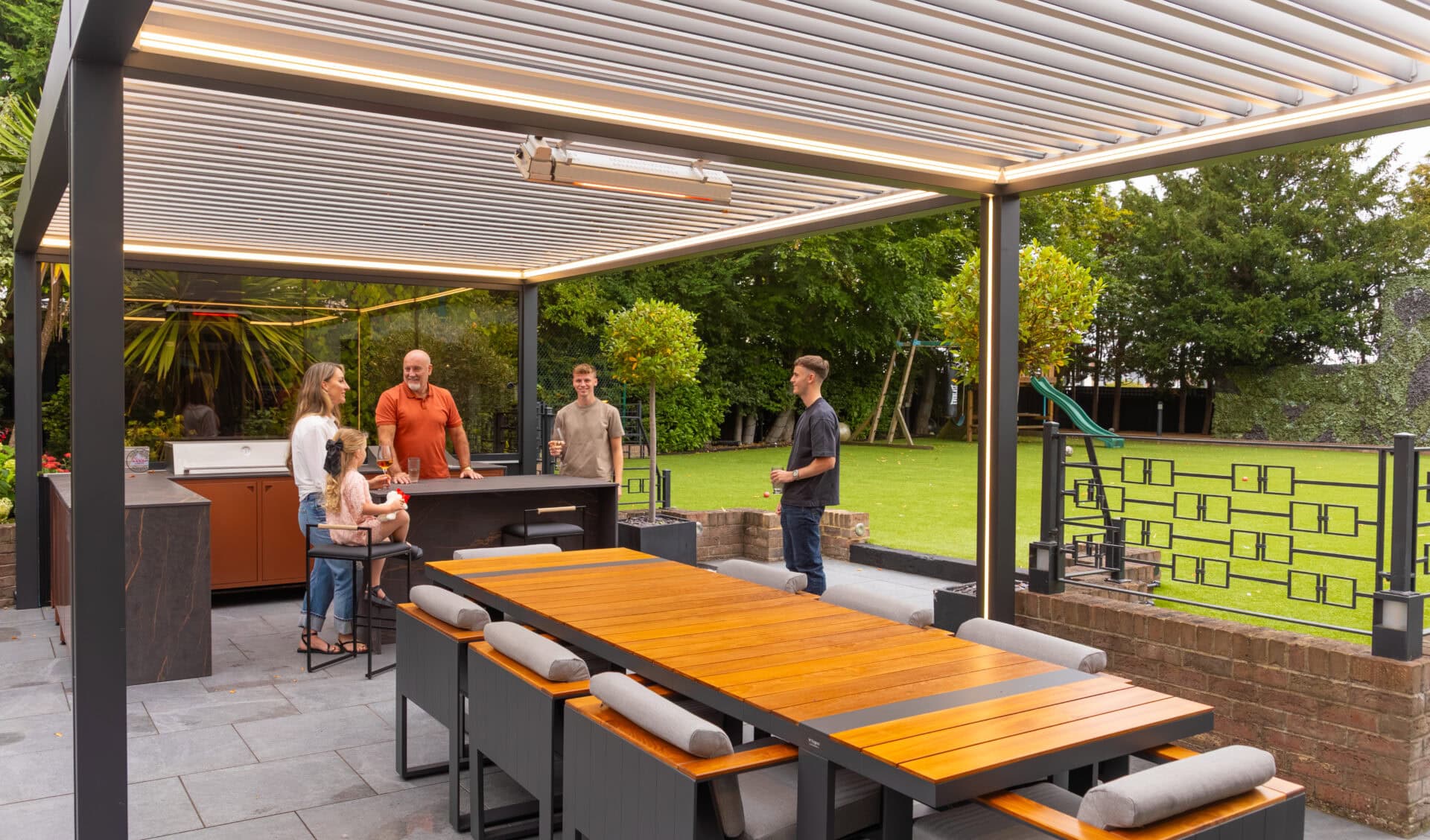
Pergola vs Gazebo: Understanding the Difference
Weighing up a pergola vs gazebo for your garden is one of the first questions we help homeowners work through at our Leeds showroom, and the answer usually comes down to how permanent, how weatherproof and how personalised the finished space needs to be.
Both structures create shelter and shade in a garden, but they are built for different purposes. A gazebo is generally a lightweight, freestanding frame with a fabric or polycarbonate roof, designed to go up quickly and often to come down again at the end of the season. A pergola, particularly an aluminium pergola with a louvre or glass roof, is engineered as a permanent addition to the home, built to specific measurements and designed to be used through the year rather than for a few weekends in summer.
This guide sets out the practical differences between a pergola and a gazebo, including durability, planning considerations and the level of customisation available, so that homeowners can choose the structure that genuinely suits how they plan to use their garden.
What Is a Pergola?
A pergola is an outdoor structure with a roof supported by posts or fixed to the wall of a house, designed to sit in a garden permanently rather than being packed away. Our range of aluminium pergolas includes fixed roof, glass roof, louvre roof and combination roof designs, built from powder-coated aluminium rather than timber or steel, which keeps the frame low maintenance and resistant to the corrosion that can affect other materials in the UK climate.
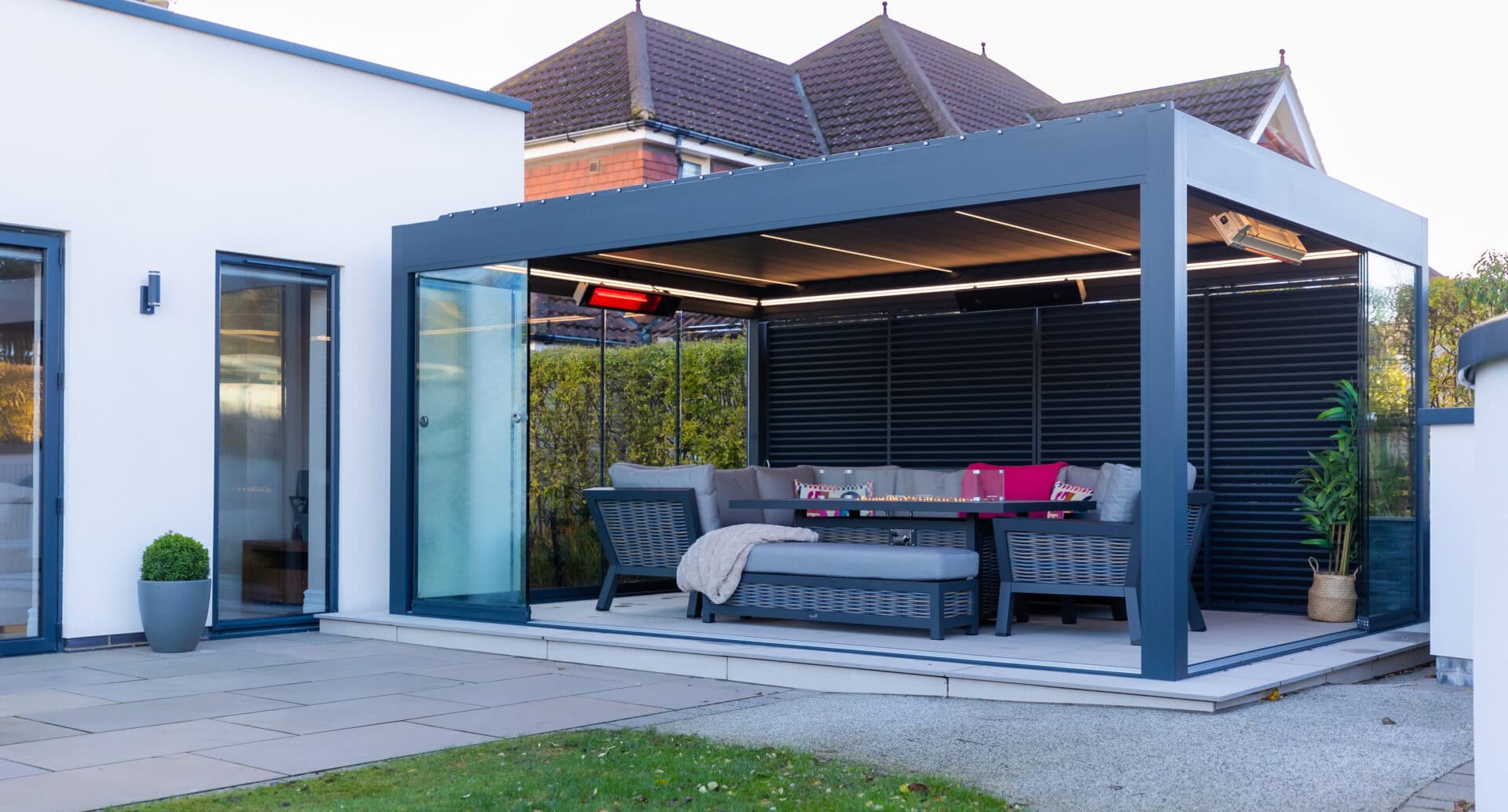
Our Winsol Pergolas range can be specified with an adjustable louvre roof, integrated LED lighting, infrared heating and glazed or louvred side enclosures, so the space can be opened up on a warm afternoon or closed down against wind and rain in the evening. Because each pergola is measured and manufactured to fit a specific garden, the result is closer to a room addition than a temporary shelter.
What Is a Gazebo?
A gazebo is typically a lightweight, freestanding structure made from a steel or aluminium pole frame with a canvas, polyester or polycarbonate roof. Pop-up and bolt-together gazebos are widely sold as garden furniture, and their main advantage is that they are quick to put up and relatively inexpensive to buy.
The trade-off is durability. A fabric gazebo roof is generally not designed to stay up through a full UK winter, and most manufacturers recommend taking the canopy down in high wind or heavy snow. Hardtop gazebos with a polycarbonate roof are more resilient, but they are still usually a freestanding, lightweight structure rather than a bespoke, engineered addition to the home, and the frame, roof and fixings are rarely specified to the same wind loading as an architecturally designed pergola.

Pergola vs Gazebo: Key Differences at a Glance
It helps to set the two structures side by side before deciding which suits a garden, a budget and how the space will actually be used across the seasons.
Aluminium Pergola
- Permanent, bespoke structure fixed to the house or ground
- Powder-coated aluminium frame, resistant to rust and rot
- Louvre, glass, fixed or combination roof options
- Can include lighting, heating and glazed or louvred sides
- Measured, designed and installed by a specialist team
- Usable in most weather, including rain and wind
Gazebo
- Freestanding, often designed to be moved or stored
- Steel or aluminium pole frame with a fabric or polycarbonate roof
- Fixed canopy shape with limited customisation
- Lighting and heating are usually separate, freestanding items
- Generally self-assembled from a kit
- Often taken down in high wind, heavy snow or over winter
Durability and Weather Protection in the UK
UK weather is the main reason many homeowners move from a gazebo to a pergola after a season or two. A fabric gazebo roof can let water pool, sag or tear in sustained rain, and the lightweight frame is rarely designed to stay up in strong gusts, which means it often has to be dismantled and stored for several months of the year.
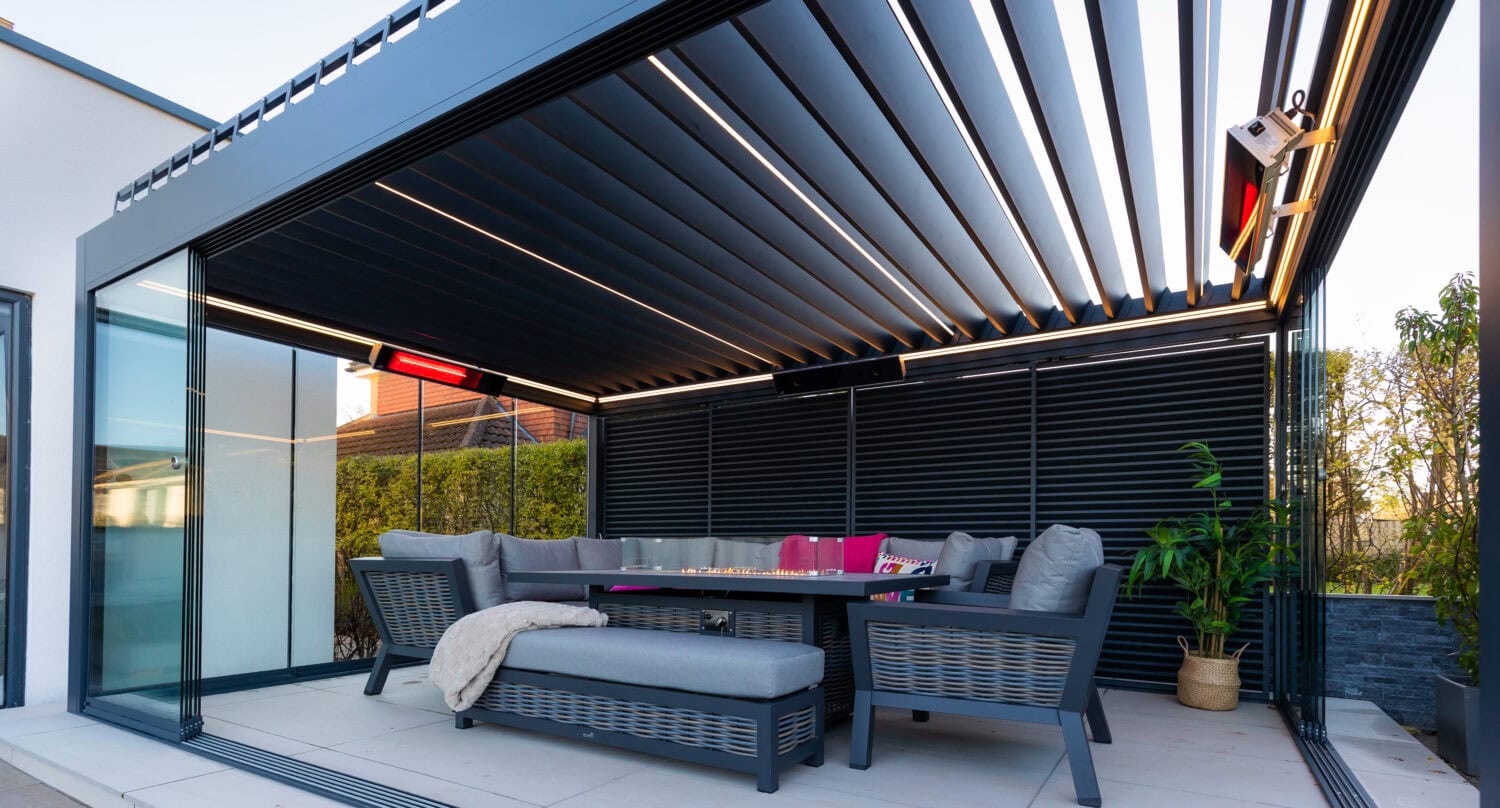
A louvre roof pergola addresses this directly. The aluminium louvres rotate to control light and ventilation, and close tightly to channel rainwater away through an internal guttering system, so the space stays dry and usable underneath even when it is raining outside. Because the frame is engineered rather than assembled from a kit, it is also designed to stay in place through a UK winter rather than being taken down.
Pergola Roof Styles Worth Considering Instead of a Gazebo Canopy
Unlike a gazebo, which typically comes with one fixed canopy shape, a pergola can be specified with the roof style that suits how a family actually wants to use the space throughout the year. Our team can talk through the options below during a visit to our Leeds showroom.
Louvre Roof Pergolas
A Louvre Roof Pergola gives the most flexibility day to day. Adjustable aluminium louvres open for shade and ventilation or close to shed rainwater through an internal gutter system, so the roof keeps working in a way a gazebo canopy cannot.
Glass Roof Pergolas
A Glass Roof Pergola takes a different approach, using a fixed glazed roof to let in natural light while keeping the space fully weathertight all year round, closer in feel to a garden room than an open structure.
Fixed Roof Pergolas
A Fixed Roof Pergola uses a solid, permanent roof panel for consistent shade and weather protection, a straightforward option for a garden that needs reliable cover without moving parts.
Combination Roof Pergolas
A Combination Roof Pergola mixes two roof types across one structure, useful where part of the garden needs full shelter and another part benefits from an open louvre section.
Pergola Roof Styles FAQs
What is a Louvre Roof Pergola?
Adjustable aluminium louvres open for shade and ventilation or close to shed rainwater through an internal gutter system. See our Louvre Roof Pergolas.
What is a Glass Roof Pergola?
A fixed glazed roof lets in natural light while keeping the space fully weathertight. Explore our Glass Roof Pergolas.
What is a Fixed Roof Pergola?
A solid, permanent roof panel provides consistent shade and weather protection, closer in feel to a garden room than a canopy. See our Fixed Roof Pergolas.
What is a Combination Roof Pergola?
Mixes two roof types across one structure, useful where part of the garden needs full shelter and another part benefits from an open louvre section. See our Combination Roof Pergolas.
Built to Last: Installation and Engineering Quality
A gazebo is usually a self-assembly product, built from a standard kit regardless of the garden it ends up in. A pergola from Exterior Spaces is different: our team carries out a home survey, measures the exact space and specifies a bespoke frame, glazing and fixings to suit the property, then installs it as a dedicated project.
That level of detail, from how glass side panels are fixed to the frame to how the structure is anchored to a patio or wall, is what allows a pergola to be used with confidence in UK weather for years rather than seasons. You can read more about our approach on The Express Difference.
Planning Permission: Pergolas vs Gazebos
Planning rules apply to the structure itself rather than to what it is called, so the key factors are size, height and position rather than whether something is marketed as a pergola or a gazebo. Many garden structures, including pergolas and gazebos, can fall under permitted development rules for outbuildings in England, provided they meet the height and boundary conditions set out by the Planning Portal. These rules can be nuanced, particularly for taller or more enclosed structures close to a boundary, so it is worth checking current guidance on GOV.UK or with the local planning authority before finalising a design.
We have written a more detailed guide on planning permission for a pergola in the UK, which covers height limits, boundary distances and when a planning application is likely to be needed. Our team can also talk through the planning considerations for a specific garden during a design appointment at our Leeds showroom.
Expert insight from Exterior Spaces on choosing between a pergola and a gazebo
Steve Bromberg, Managing Director at Exterior Spaces, shares:
“The best outdoor structures are chosen around how a family actually wants to use their garden, not just how the space looks on the day it goes up.
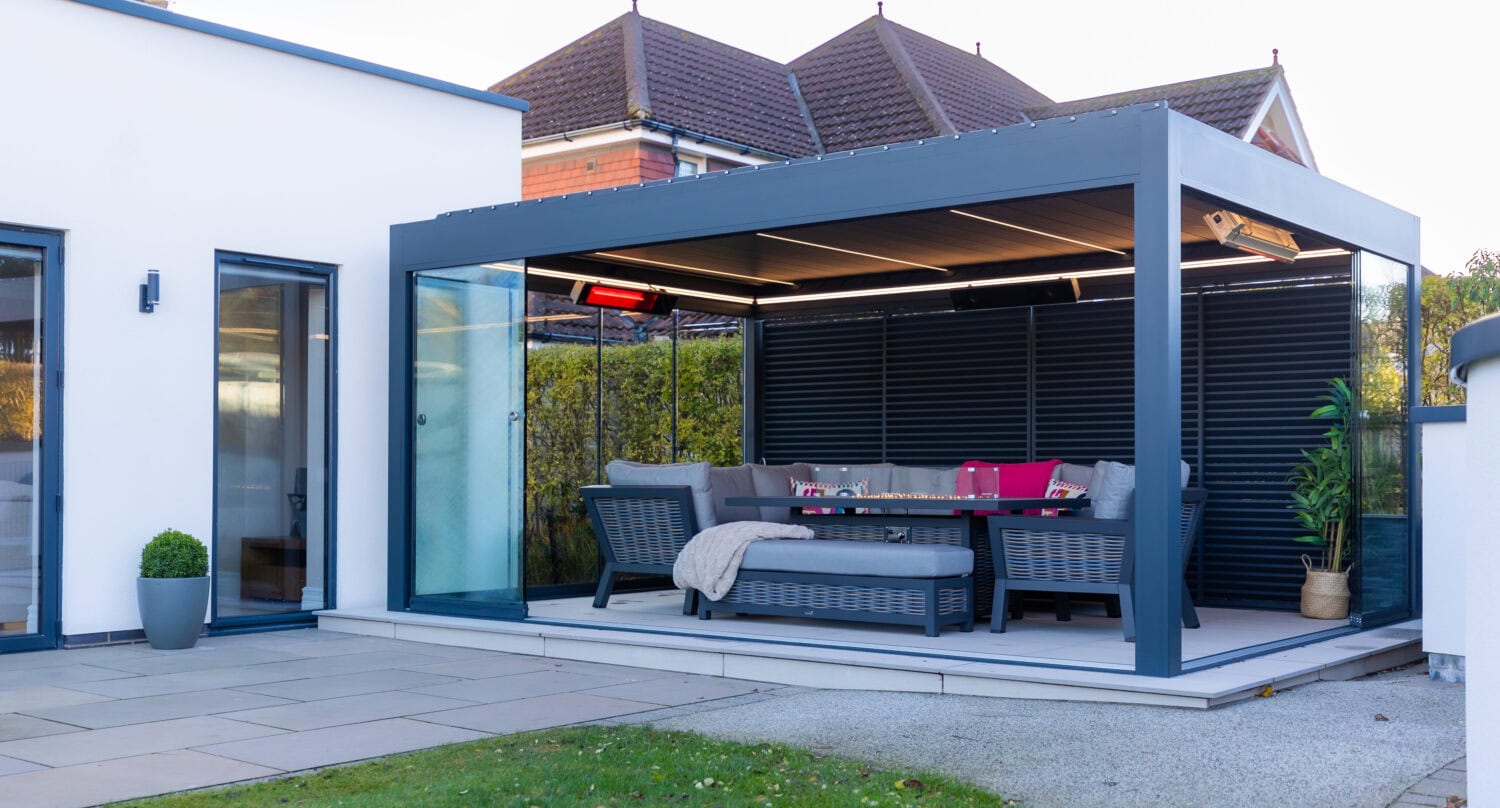
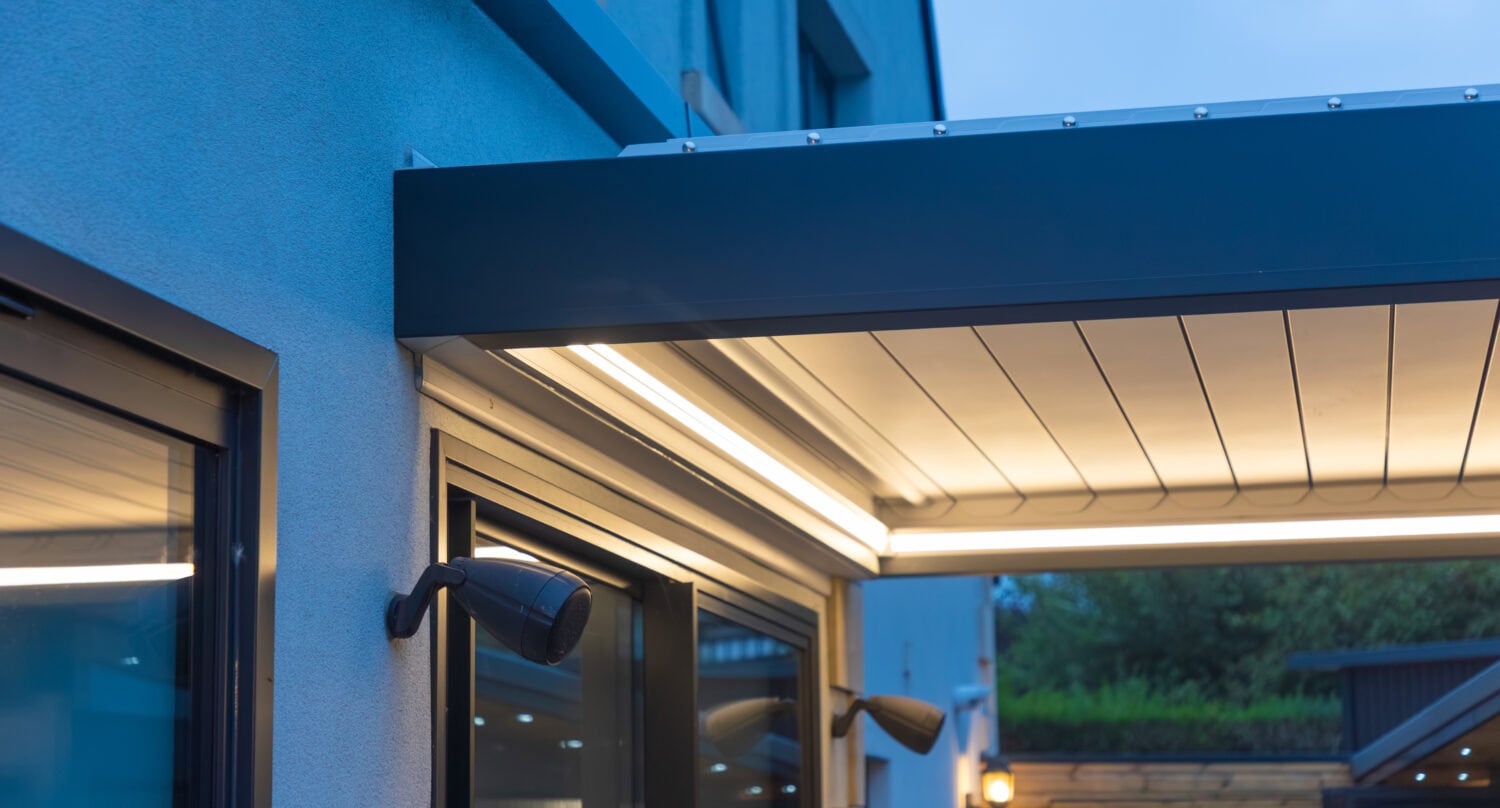
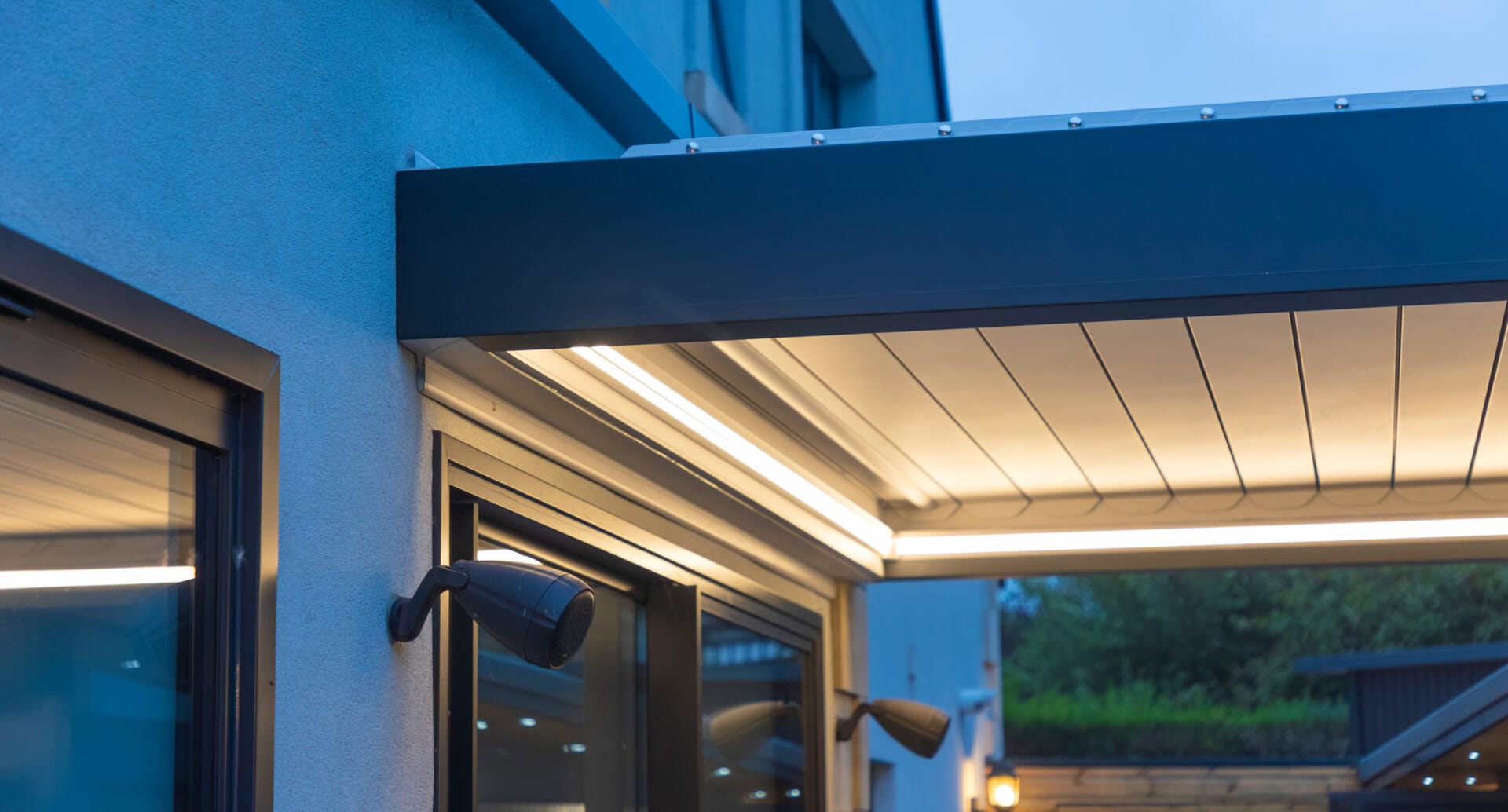
We recently completed a bespoke Winsol climate pergola in Sheffield, a 2360mm by 4000mm structure in RAL 7038 Agate Grey with a weathertight louvre roof, integrated lighting and an infrared heater. The louvres close tight against an internal gutter, which is the detail that tends to separate a genuine pergola from a gazebo: the roof keeps working, and the space stays usable, even in poor weather.
A gazebo can suit an occasional weekend in the garden, but for a family who want a space they will use through most of the year, a properly surveyed and engineered pergola is generally the better long-term choice.”
Making the Right Choice for Your Garden
A gazebo can still be a sensible choice for an occasional event, a temporary shelter over a hot tub, or a starter structure while a longer-term plan comes together. For a garden that is used regularly for dining, entertaining or simply sitting outside through the year, a bespoke aluminium pergola tends to offer better value over time, particularly once side enclosures are added to extend the usable season further.
If covering a driveway or protecting a car is the priority rather than a seating area, our aluminium carports are worth considering instead of a pergola or gazebo. For homeowners who want a fully enclosed, glazed space rather than an open-sided structure, our Glass Verandas and Glass Rooms sit between a pergola and a full extension. We would recommend visiting our Leeds showroom to see the different structures side by side before deciding, or browsing our case studies for examples of completed projects.
Pergola vs Gazebo FAQs
What is the main difference between a pergola and a gazebo?
A pergola is generally a permanent, bespoke structure fixed to the house or ground, while a gazebo is a freestanding, often temporary structure that can be taken down or moved. The materials, roof design and level of customisation also differ significantly between the two.
Is a pergola better than a gazebo for UK weather?
An aluminium pergola with a louvre or glass roof is generally better suited to UK weather than a fabric gazebo, as the roof is engineered to shed rainwater and withstand wind rather than needing to be taken down in poor conditions. See our Louvre Roof Pergolas for more detail.
Do you need planning permission for a pergola or a gazebo?
It depends on the size, height and position of the structure rather than what it is called. Many garden structures fall under permitted development, but taller or more enclosed designs may need a planning application. See our pergola planning permission guide for more detail.
Can a pergola be used all year round?
A pergola with a louvre or glass roof, integrated heating and optional side enclosures can be used through most of the year, whereas a gazebo is usually better suited to occasional or seasonal use.
How long does a gazebo typically last compared with an aluminium pergola?
A fabric gazebo canopy often needs replacing every few years, particularly if it is left up through winter, while a powder-coated aluminium pergola is designed to last for many years with minimal maintenance.
Can a pergola be enclosed like a gazebo?
Yes. Our pergola side enclosures use glazed or louvred panels to close off the sides, offering more privacy and weather protection than most gazebo side panels.
Does a pergola or a gazebo add more value to a property?
A bespoke, permanently installed pergola is generally viewed as a more significant garden improvement than a freestanding gazebo, as it is a fixed addition to the property rather than a piece of outdoor furniture.
What is a louvre roof pergola and how does it compare with a gazebo roof?
A louvre roof pergola has rotating aluminium slats that open for ventilation or close to form a weathertight roof. Unlike a fixed fabric gazebo canopy, the roof can be adjusted on demand and is designed to manage rainwater through an internal guttering system.
Still Deciding Between a Pergola and a Gazebo?
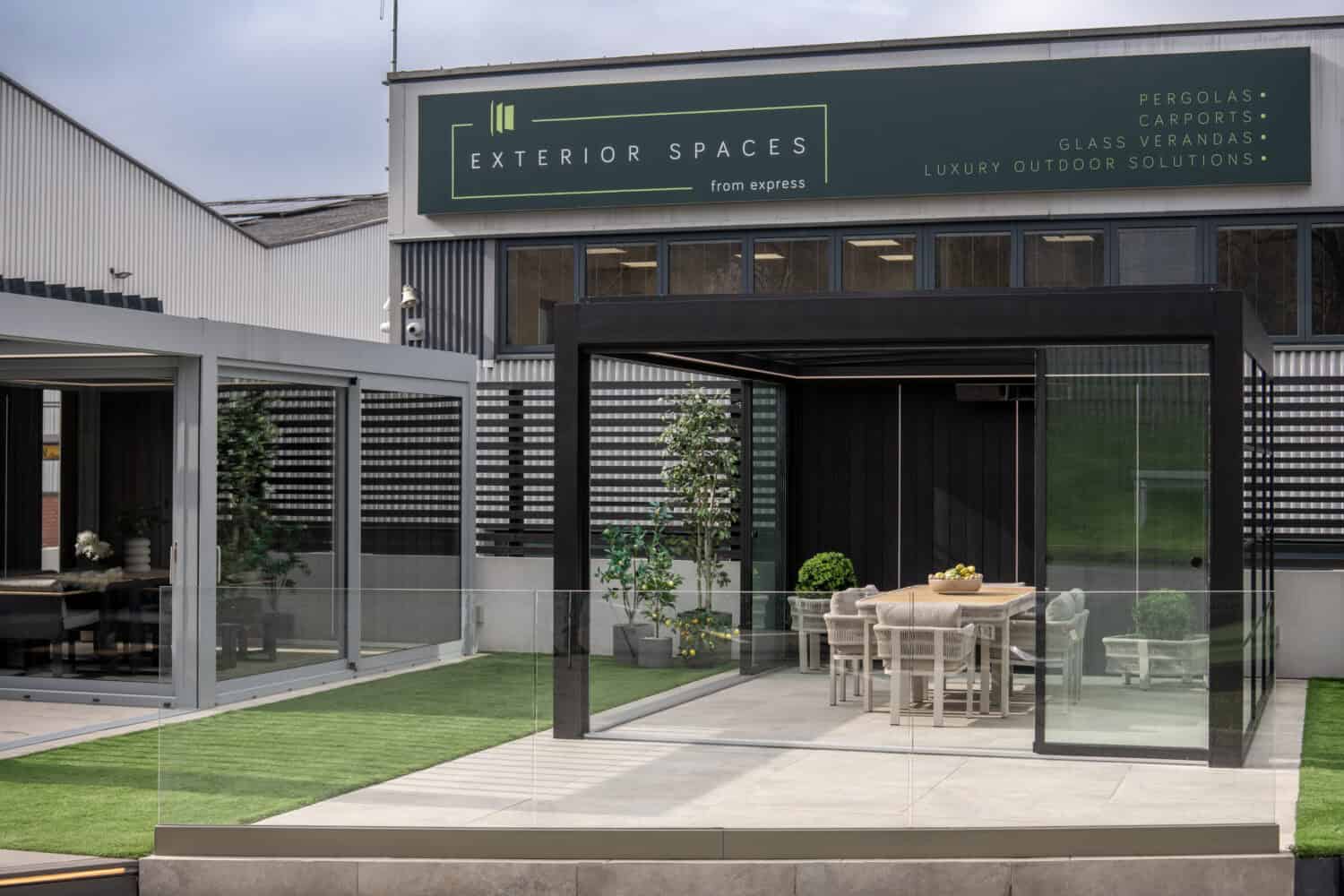
Visit our Leeds showroom to see our pergola range in person, talk through sizing and roof options with our design team, and get a feel for the build quality compared with a standard gazebo. We can also arrange a home survey or send a free brochure.