TRANSFORMING HOMES SINCE 2007
PART OF THE EXPRESS GROUP
DEDICATED SUPPLY & INSTALL SERVICE

Veranda vs Pergola: An Overview
Choosing between a veranda and a pergola is one of the first decisions many homeowners face when planning a new outdoor space, and understanding the veranda vs pergola comparison properly makes that decision far easier.
Both structures extend the garden into a sheltered, usable space, but they are built differently and suit different gardens. A veranda is typically attached to the house with a solid or glazed roof, built to give consistent, weatherproof shelter close to the property. A pergola, particularly a bioclimatic model with a louvre roof, can be freestanding or attached, and gives more flexibility between open air and full shelter depending on how the roof is set.
At Exterior Spaces, part of the Express Group, we design and install both Glass Verandas and aluminium pergolas for gardens across Yorkshire and the wider UK, so this guide sets out the practical differences between the two, where each works best, and how to decide which is right for your own garden.
What Is a Veranda?
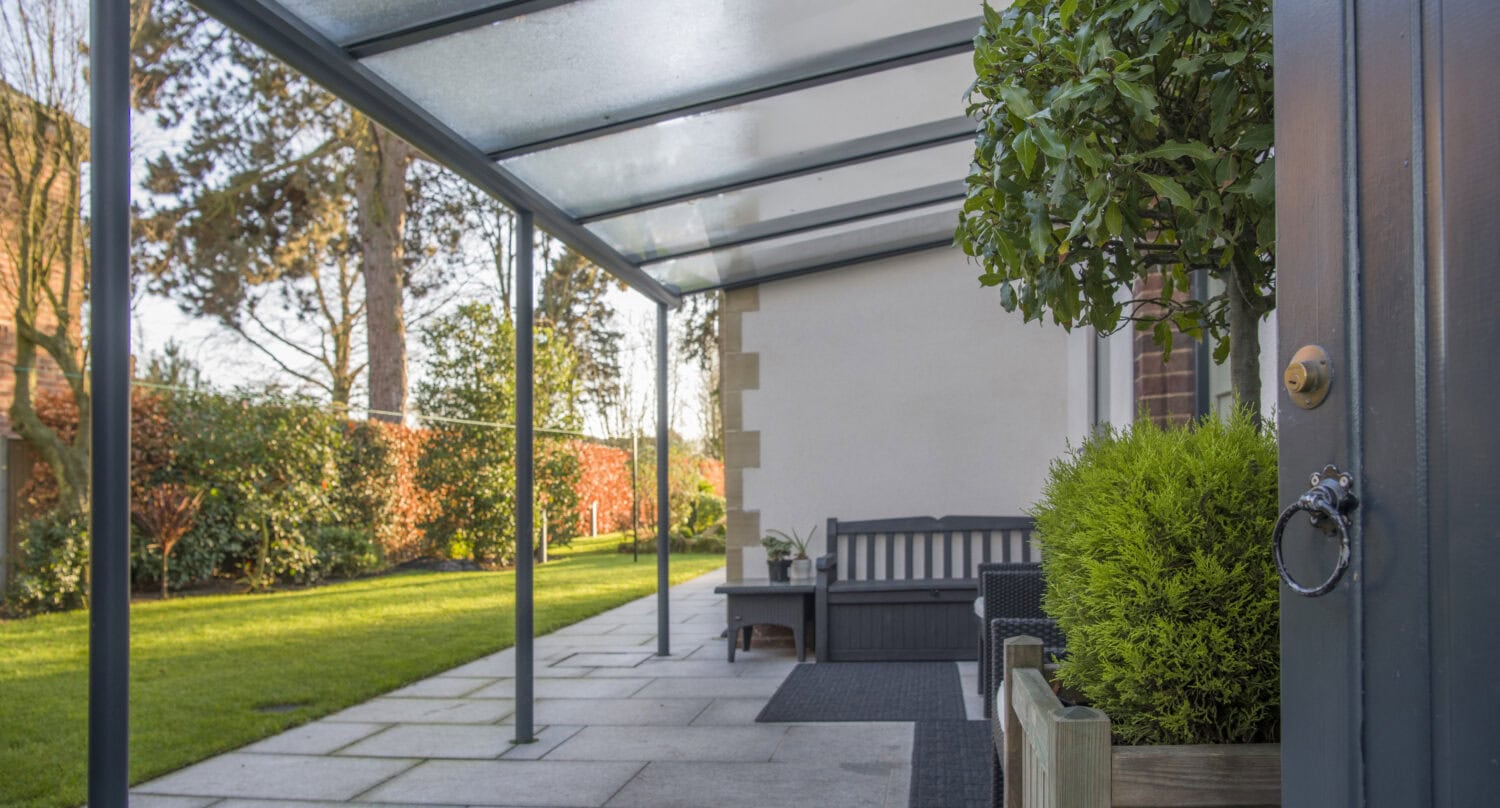
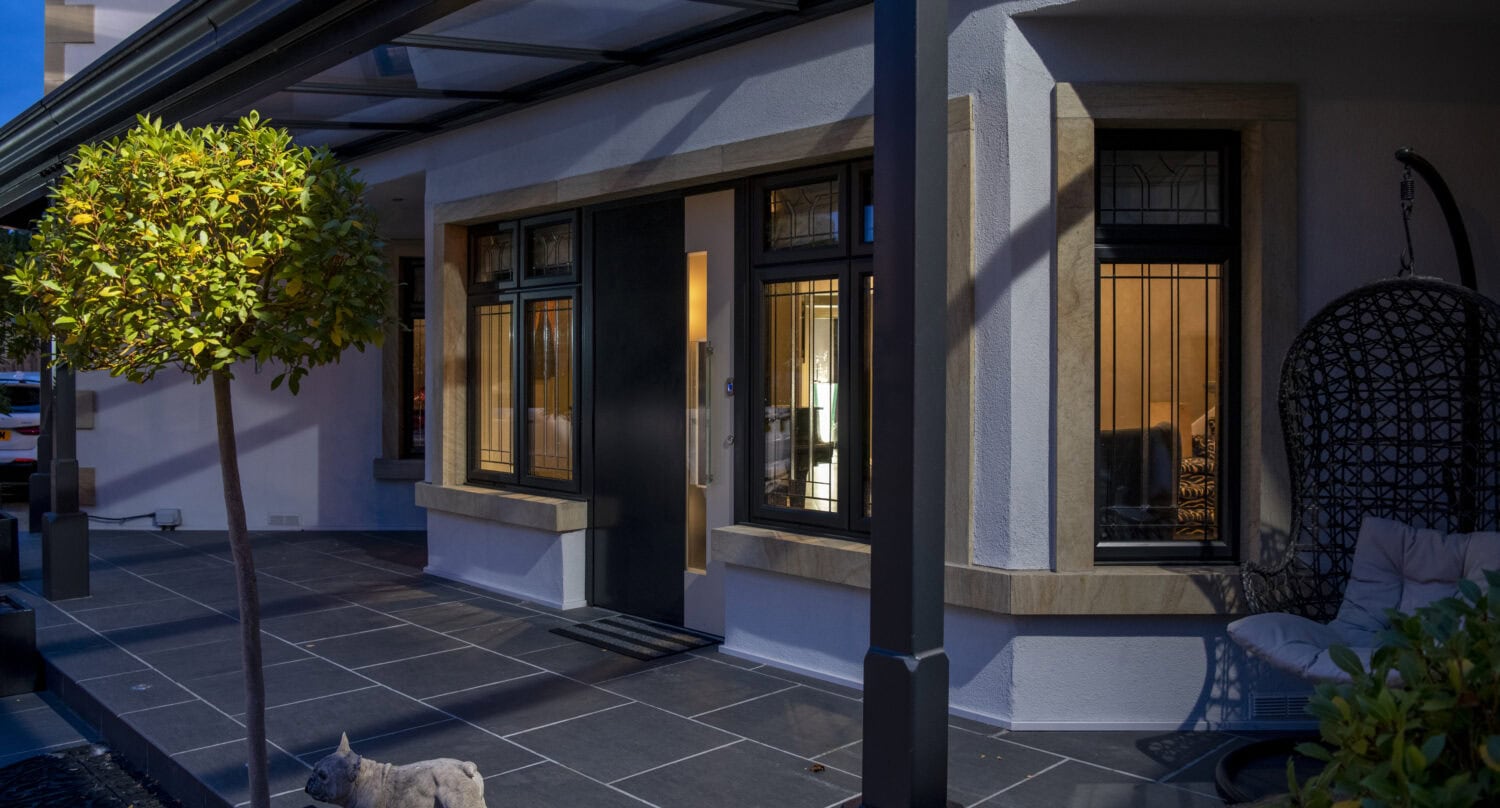
A veranda is a roofed structure fixed to the house, usually running along a rear or side elevation. Our Glass Verandas are built from aluminium with a fully glazed roof, designed to cover a larger area of patio and connect directly with bi-fold or sliding doors. A smaller Glass Canopy option gives a lighter, more minimalist look with a floating-glass appearance and a smaller footprint.
Because a veranda is attached to the house and generally keeps a fixed roof, it tends to suit homeowners who want:
- Consistent, reliable shelter close to the back of the house, ideal alongside a kitchen extension or bi-fold doors
- A covered walkway or entrance feature at the front or side of a property
- Protection for furniture, barbecues or outdoor kitchens that stay in place year-round
- A structure that reads as part of the architecture of the house, rather than a separate garden feature
Our recent project write-up on a bespoke glass veranda in Huddersfield shows how a glass veranda with frameless sliding glass doors can create a sheltered outdoor space that makes the most of far-reaching countryside views, even on a patio set at two different levels.
What Is a Pergola?
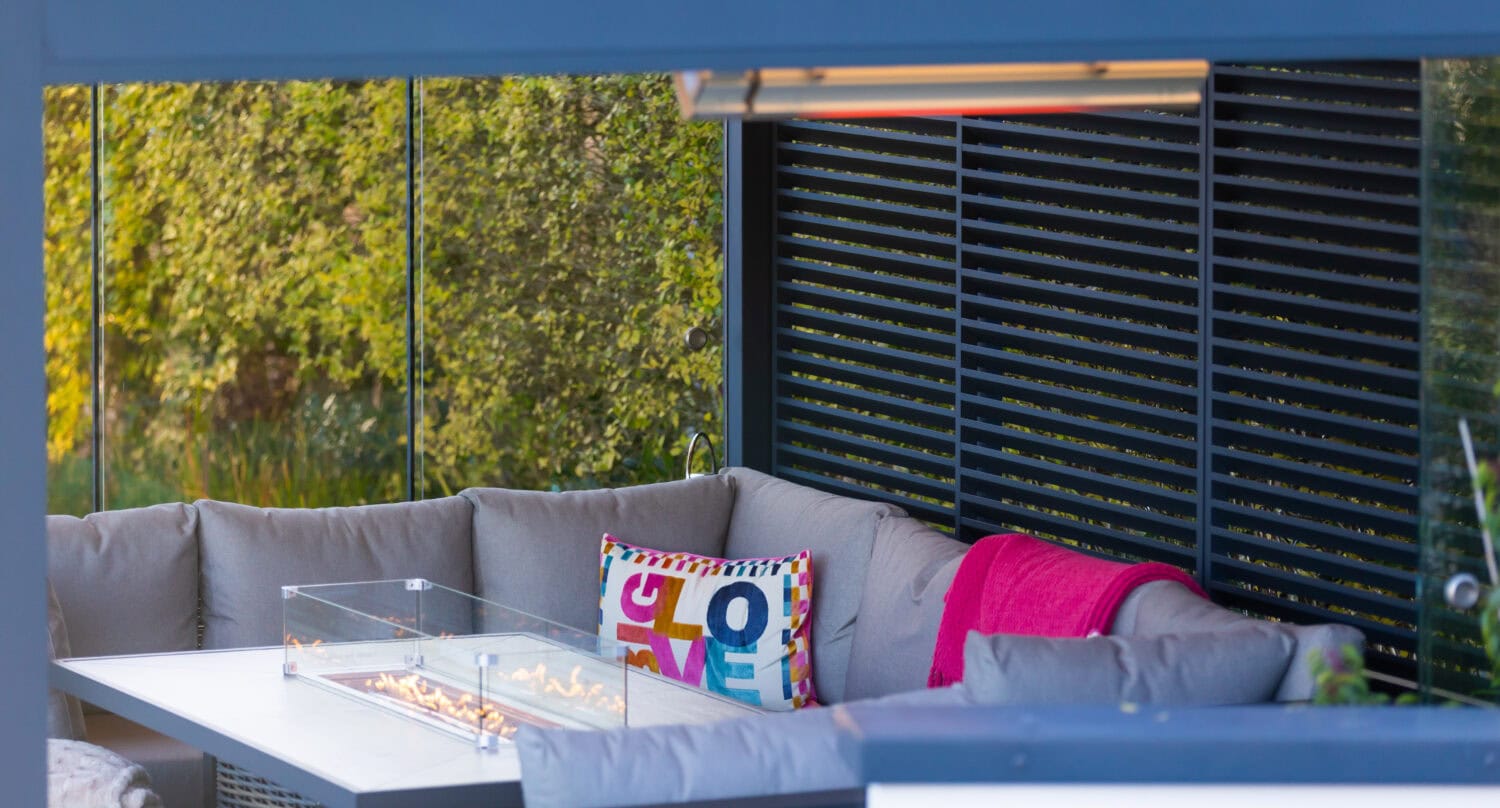
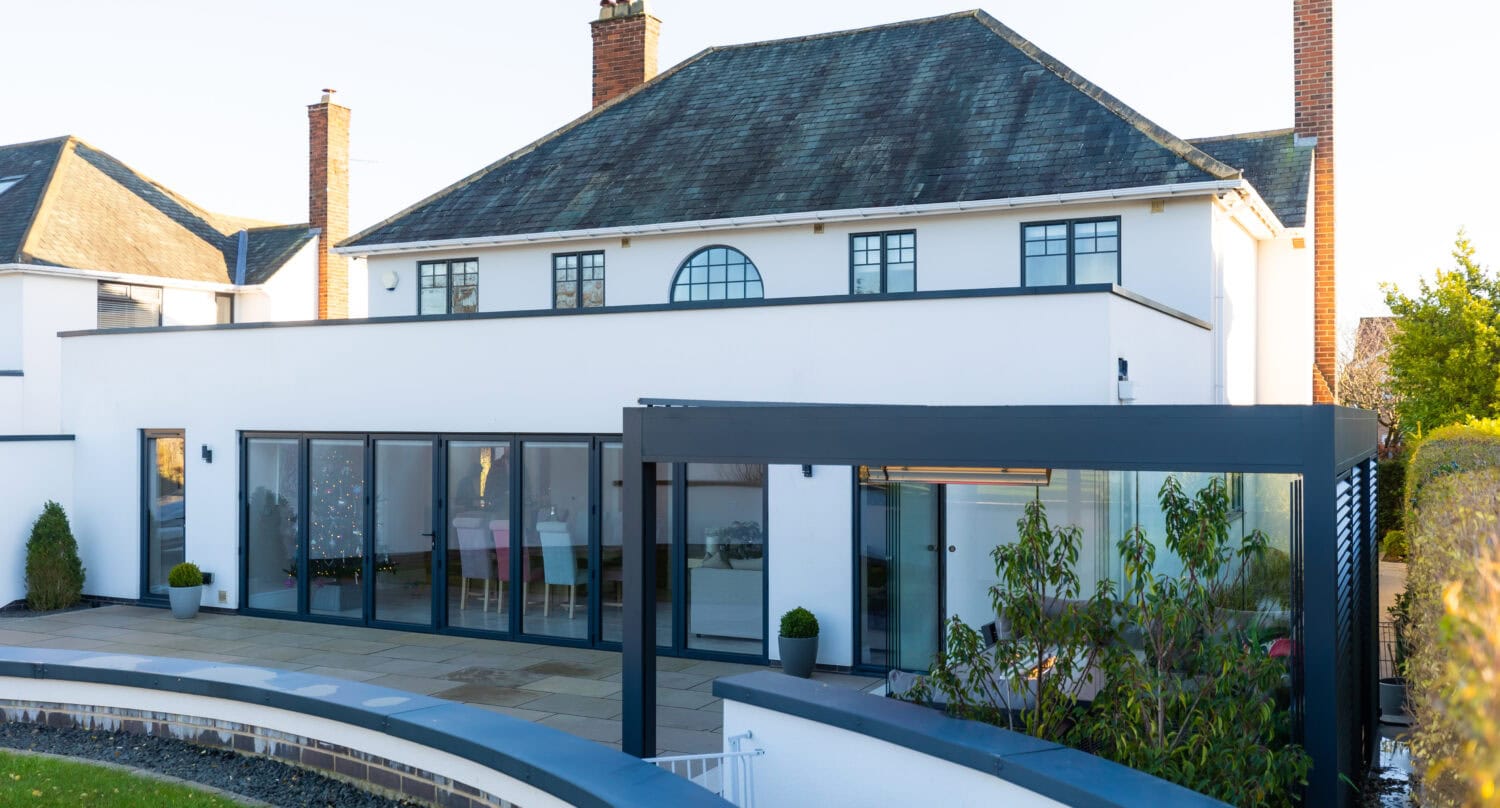
A pergola is a post-supported structure that can stand freestanding in the garden or attach to the house. Our range includes Louvre Roof Pergolas with a motorised, bioclimatic roof that opens, closes and tilts, Glass Roof Pergolas, Fixed Roof Pergolas and Combination Roof Pergolas that mix roof types across one frame.
A pergola tends to suit homeowners who want:
- Flexibility to open the roof fully on warm days and close it when the weather turns, particularly with a louvre roof
- A structure positioned away from the house, over a seating area, hot tub or dining space on the lawn or a separate patio
- The option to add side enclosures, such as glazed or louvred panels, to build up shelter gradually rather than all at once
- A more architectural, freestanding garden feature rather than an extension of the house itself
We looked at how far enclosures can go in our guide to pergola side panels, and at attaching a pergola directly to the house in our piece on wall mounted pergola ideas.
Veranda vs Pergola at a Glance
Choose a Veranda if you want:
- Permanent, consistent shelter attached to the house
- A fully glazed roof that needs no daily adjustment
- A covered link between an indoor kitchen-diner and the garden
- A feature entrance or side cover for the property
Choose a Pergola if you want:
- A roof you can open and close depending on the weather
- A freestanding structure away from the house, over a dining or lounge area
- The option to add side enclosures gradually over time
- A more architectural statement piece in the garden
Shelter and Weather Protection
The biggest practical difference between the two comes down to how each roof behaves in UK weather. A veranda’s roof is fixed, usually in toughened glass, so it gives dependable cover whatever the forecast, with no need to adjust anything before you go outside.
A Louvre Roof Pergola works differently. The aluminium louvres open to let sun and air through on warmer days, then close to shed rain in minutes, usually by remote control or a connected app. We set out the practical case for this in our article on the benefits of a louvre roof pergola, while a Glass Roof Pergola gives a fixed, veranda-like roof but keeps the freestanding positioning of a pergola. We cover this further in the benefits of glass roof pergolas.
Planning Permission for Verandas and Pergolas
Both structures can often be built under permitted development rights, though this is not always clear-cut and depends on factors including height, how far the structure projects from the house, how close it sits to a boundary, and whether the property is in a conservation area or similarly protected location. The government’s permitted development technical guidance sets out the national rules, and your local planning authority can confirm how they apply to your specific property.
We go into more detail on this for pergolas specifically in do you need planning permission for a pergola in the UK. Because a veranda is fixed to the house and often sits closer to boundaries than a freestanding pergola, it is worth checking your own circumstances carefully, or asking us to talk it through at a design appointment before committing to a layout.
Expert insight from Exterior Spaces on choosing between a veranda and a pergola
Steve Bromberg, Managing Director at Exterior Spaces, shares:
“The best outdoor structures are designed around the property, the garden and how the client actually wants to use the space day to day, rather than around a single product.
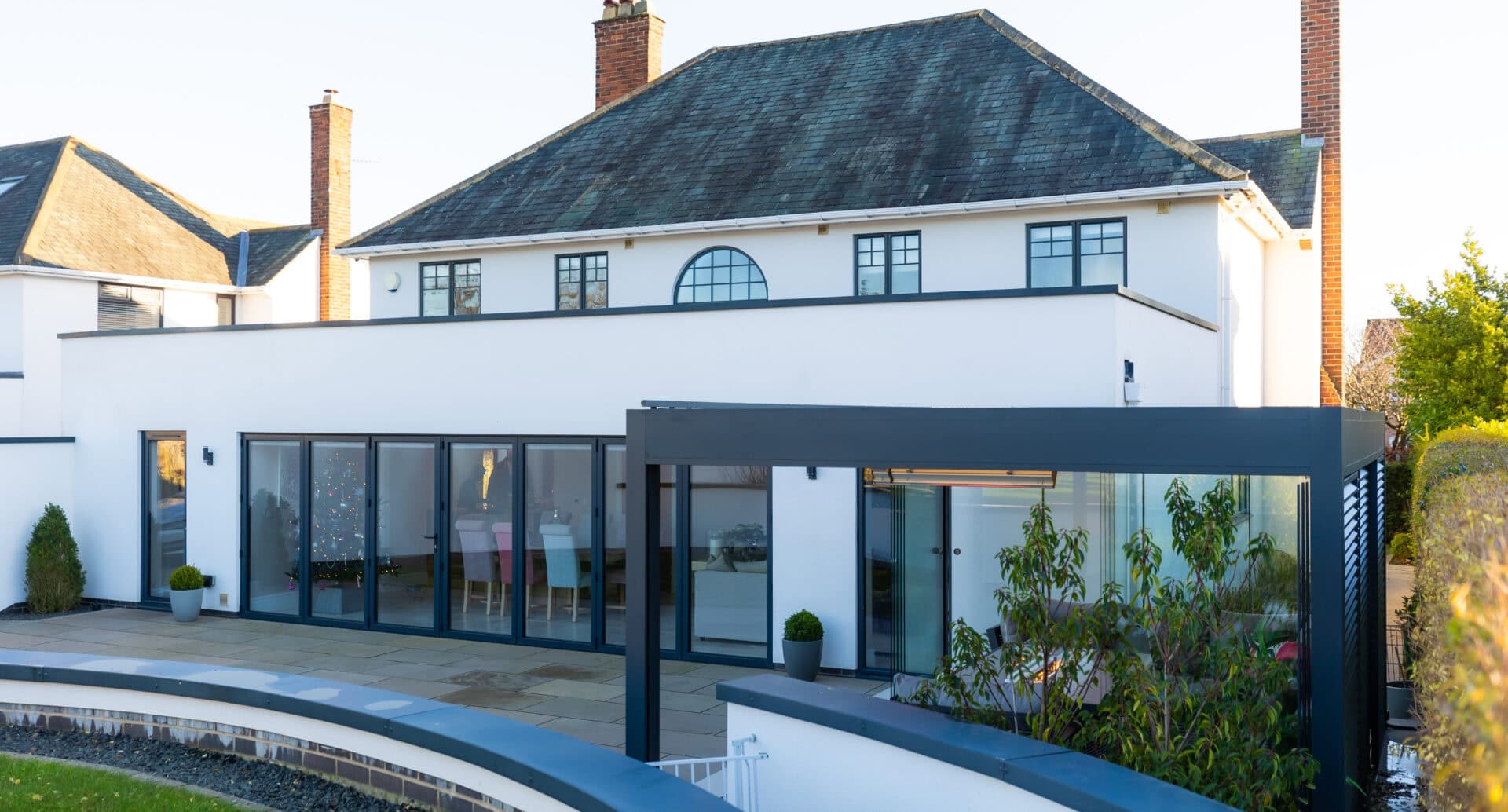
We saw that clearly on a recent 4m x 9m house-connected pergola in Harrogate, where the clients wanted a sheltered outdoor kitchen and dining area leading straight out from their kitchen. We specified a Selene pergola connected to the house, with an opening louvre roof and tinted glass sliding screens across the front, so the space can stay open to the garden on a good day or be screened off when the weather turns.
If you want fixed, year-round shelter close to the house, a veranda is usually the simpler answer; if you want flexibility and the option to open up on a good day, a pergola gives you that, and the two can often be combined on one project.”
Which Should You Choose for Your Garden?
There is no single right answer, but a few practical questions help narrow it down:
- Where is the space in relation to the house? Right against the back wall, close to doors, tends to suit a veranda. A spot further into the garden, over a hot tub or separate seating area, often suits a pergola.
- How much daily flexibility do you want? If you want the option to open the roof fully in summer, a louvre roof pergola gives you that in a way a fixed veranda roof cannot.
- Is the structure replacing or extending existing glazing? A veranda often works well alongside bi-fold or sliding doors you already have, continuing the same sightlines.
- Do you want to build up shelter gradually? A pergola with side enclosures added later gives you that option; a veranda is normally specified as one complete structure from the outset.
A home survey is usually the quickest way to settle it. Our design team can look at the orientation of the garden, the existing doors and windows, and how the space will realistically be used, then recommend whether a veranda, a pergola, or a combination of both makes the most sense.
Combining Verandas, Pergolas and Side Enclosures
In practice, the choice is not always one or the other. A Combination Roof Pergola can mix a fixed glass section with a louvred section on the same frame, giving veranda-style consistency over part of the space and pergola-style flexibility over the rest. Adding glazed side enclosures to a pergola can also bring it closer to a veranda in terms of weather protection, while keeping the open-roof option on milder days.
A Glass Canopy is worth considering too, particularly over an entrance or a smaller section of patio where a full veranda or pergola would be too much structure. For a wider look at how these choices fit into a garden redesign, our guide on creating a seamless indoor-outdoor living space covers the broader planning questions, from flooring to door choice.
Cost, Installation and Lead Time Considerations
Every project is bespoke, measured to the millimetre for the property, so we would rather give you an accurate figure after a home survey than an estimate that does not reflect your garden. As a general rule, a veranda’s installation is usually more straightforward because the roof is fixed and the structure is simpler to engineer, while a bioclimatic pergola involves more moving parts, motors and sensors, which can mean a longer specification and build process.
Both are installed by our own teams, and both can include options such as integrated LED lighting, heaters and, for pergolas, home automation control. Visiting our Leeds showroom or booking a design appointment is the most reliable way to see both structures in person and talk through realistic timings for your project.
Veranda vs Pergola
What is the main difference between a veranda and a pergola?
A veranda is fixed to the house with a solid or glazed roof and gives consistent, permanent shelter. A pergola can be freestanding or attached, and a louvre roof pergola lets you open and close the roof depending on the weather.
Is a veranda cheaper than a pergola?
It depends on size, glazing and features rather than the structure type alone. A fixed-roof veranda is often simpler to engineer than a motorised louvre roof pergola, but both are bespoke, so we recommend a home survey for an accurate figure.
Do I need planning permission for a veranda or a pergola?
Many projects fall under permitted development, but this depends on height, how far the structure projects, boundary distances and whether the property is in a protected area. See our guide on pergola planning permission and check the government’s technical guidance, or ask your local planning authority.
Can a pergola be attached to the house like a veranda?
Yes. Wall-mounted pergolas attach directly to the house and can include glazed side screens, giving many of the benefits of a veranda while keeping the option of an opening roof. See our guide to wall mounted pergola ideas.
Which gives better protection from rain, a veranda or a pergola?
A veranda’s fixed roof gives constant protection. A louvre roof pergola can match this when closed, and sheds rain effectively, but needs the roof to be closed first, usually by remote control or an automated weather sensor.
Can I add side panels to a veranda?
Our Glass Verandas are generally specified as a complete structure, including any glazed screens, from the outset. Side enclosures are more commonly added to pergolas, where they can be fitted at the same time or afterwards. See our guide to pergola side enclosures.
Does a veranda or pergola add more value to a property?
Both can add kerb appeal and usable outdoor space, which buyers generally respond well to. The right choice for value depends on the property and how well the structure suits its architecture and garden layout, so it is worth discussing with our design team.
Can I see both a veranda and a pergola before I decide?
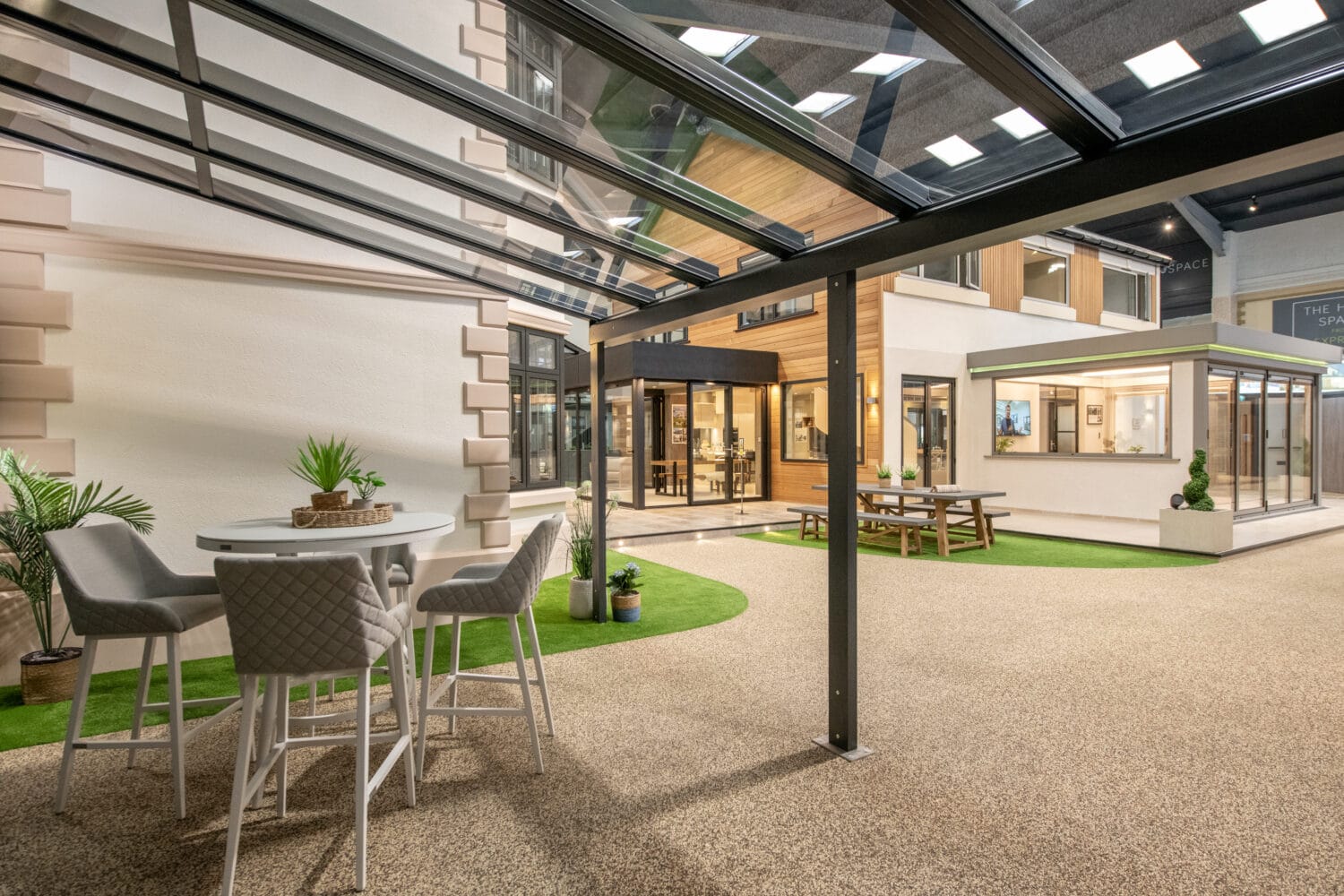
Yes. Our Leeds showroom displays bioclimatic and fixed pergolas alongside glass verandas, so you can compare them in person before booking a home survey.


See Verandas and Pergolas in Our Leeds Showroom
The easiest way to decide between a veranda and a pergola is to see both in person. Our Leeds showroom displays full-size pergolas and glass verandas together, so you can compare the roof styles, finishes and glazing options before choosing what’s right for your garden.
